

Appartement entier
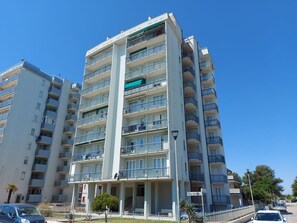
Cortina 2-24 Appartement confortable de deux pièces face à la mer
Galerie photos de l’hébergement Cortina 2-24 Appartement confortable de deux pièces face à la mer
Avis voyageurs
8,48,4 sur 10
Très bien
Équipements populaires
- Cuisine
- Lave-linge
- Sèche-linge
- Animaux de compagnie admis
- Climatisation
Ajoutez des dates pour connaître les prix
À propos de cet hébergement
Cortina 2-24 Appartement confortable de deux pièces face à la mer
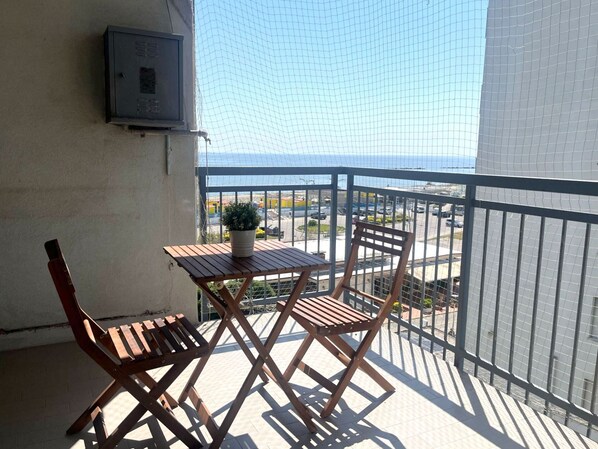
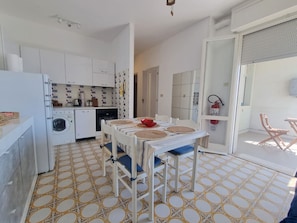
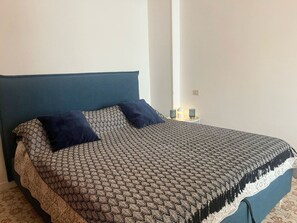
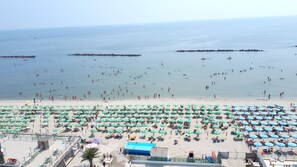
- We offer for rent this lovely two-room holiday home in Lido di Pomposa, located on the 4th floor in a seafront condominium with elevator, a stone's throw from the main avenue that becomes pedestrian on summer evenings, close to all services. The house has been partially renovated and is composed as follows: a living room with a balcony overlooking the sea, a double sofa bed, TV with satellite decoder, kitchenette with induction hob and dishwasher, double bedroom + single bed, bathroom, washing machine, air conditioning.
Comacchio is about 10 km away and is the most original and fascinating historical center in Po Delta Park.
Origin of the ancient Spina, long controversial from Ferrara and Ravenna, by the Popes and Emperors, has ancient origins: it rises in fact at the dawn of the Middle Ages, when the initial settlement settled on a chain of islets emerging in the evergreen mouth of the Padana.
Fishing, shellfish, salt production were the source of its flourishingness and its overturns, due to the conflicts that opposed it to Venice. After the Estense era, during the Pontifical State, the city revived, so much so that the happiest architectural and monumental interventions dates back to the sixth-eighteenth century.
Now Comacchio is a lagoon town that enchants: it is gentle and genuine, with a vitality that is lymph in respect to its own history and the desire to valorize it. A widespread reminder remembers the proximity to the sea, whose light fills the urban spaces, even more potentiated by the quiet areas of the canals.
The town of Comacchio and its valleys represent the "heart" of the Delta, are in fact the green lungs of the whole Adriatic coast from Chioggia to Cattolica. The Comacchio Lagoon are the real museum and represent one of the most important lagoon complexes in Italy and Europe. They extend to the provinces of Ferrara and partly to Ravenna, for more than 11,000 hectares, between Comacchio and the River Reno, and are connected to the sea through the channels of Magnavacca, Logonovo, Bellocchio and Gobbino. Formations of brackish water, they represent an important biotope of brackish water wet zone, made up of extreme alofil vegetation and declared of international interest, according to the Ramsar Convention of 1971.
Around the lagoon the historical and economic history of Comacchio has been centered and developed; this is an almost unique example of integration between the natural environment and human activity, where salt production and fisheries have always represented the primary economic bases, to which local craftsmanship was predominantly linked, being almost agriculture is absent and tourism is completely lacking. These latest economic components have developed almost simultaneously with the reclamation and draining of thousands of acres of lagoon, leaving unchanged that part of which is still practiced especially eel fishing with special instruments named Lavoriero.
The total surface is formed by the lagoon "Fossa di Porto" (including Zavelea oasis), "Lido di Magnavacca", "Fattibello" (which in the past was not far used for fishing as a daily livelihood) and "Campo"; has a morphology articulated because of:
artificial crevices created to delineate the catchment basins of the bush, barene and ancient dunosis emerging from the waters.
Boscoforte Peninsula is a very suggestive sandy tongue, extending from the Reno River between the lagoon "Fossa di Porto" and "Lido di Magnavacca" for a length of 6 km, formed by the expanse of a dune-coastal cordon of the Etruscan period.
We offer for rent this lovely two-room holiday home in Lido di Pomposa, located on the 4th floor in a seafront condominium with elevator, a stone's throw from the main avenue that becomes pedestrian on summer evenings, close to all services. The house has been partially renovated and is composed as follows: a living room with a balcony overlooking the sea, a double sofa bed, TV with satellite decoder, kitchenette with induction hob and dishwasher, double bedroom + single bed, bathroom, washing machine, air conditioning.
Comacchio is about 10 km away and is the most original and fascinating historical center in Po Delta Park.
Origin of the ancient Spina, long controversial from Ferrara and Ravenna, by the Popes and Emperors, has ancient origins: it rises in fact at the dawn of the Middle Ages, when the initial settlement settled on a chain of islets emerging in the evergreen mouth of the Padana.
Fishing, shellfish, salt production were the source of its flourishingness and its overturns, due to the conflicts that opposed it to Venice. After the Estense era, during the Pontifical State, the city revived, so much so that the happiest architectural and monumental interventions dates back to the sixth-eighteenth century.
Now Comacchio is a lagoon town that enchants: it is gentle and genuine, with a vitality that is lymph in respect to its own history and the desire to valorize it. A widespread reminder remembers the proximity to the sea, whose light fills the urban spaces, even more potentiated by the quiet areas of the canals.
The town of Comacchio and its valleys represent the "heart" of the Delta, are in fact the green lungs of the whole Adriatic coast from Chioggia to Cattolica. The Comacchio Lagoon are the real museum and represent one of the most important lagoon complexes in Italy and Europe. They extend to the provinces of Ferrara and partly to Ravenna, for more than 11,000 hectares, between Comacchio and the River Reno, and are connected to the sea through the channels of Magnavacca, Logonovo, Bellocchio and Gobbino. Formations of brackish water, they represent an important biotope of brackish water wet zone, made up of extreme alofil vegetation and declared of international interest, according to the Ramsar Convention of 1971.
Around the lagoon the historical and economic history of Comacchio has been centered and developed; this is an almost unique example of integration between the natural environment and human activity, where salt production and fisheries have always represented the primary economic bases, to which local craftsmanship was predominantly linked, being almost agriculture is absent and tourism is completely lacking. These latest economic components have developed almost simultaneously with the reclamation and draining of thousands of acres of lagoon, leaving unchanged that part of which is still practiced especially eel fishing with special instruments named Lavoriero.
The total surface is formed by the lagoon "Fossa di Porto" (including Zavelea oasis), "Lido di Magnavacca", "Fattibello" (which in the past was not far used for fishing as a daily livelihood) and "Campo"; has a morphology articulated because of:
artificial crevices created to delineate the catchment basins of the bush, barene and ancient dunosis emerging from the waters.
Boscoforte Peninsula is a very suggestive sandy tongue, extending from the Reno River between the lagoon "Fossa di Porto" and "Lido di Magnavacca" for a length of 6 km, formed by the expanse of a dune-coastal cordon of the Etruscan period.
Hébergements similaires

Hotel Ariella
Cervia
Hotel Ariella
Cervia
- Wi-Fi gratuit
- Restaurant
- Climatisation
- Petit déjeuner disponible
9.8 sur 10, Exceptionnel, 7 avis
9,8
Exceptionnel
7 avis

Meet Hostel Cervia
Pinarella
Meet Hostel Cervia
Pinarella
- Parking inclus
- Wi-Fi gratuit
- Blanchisserie
7.2 sur 10, Bien, 7 avis
7,2
Bien
7 avis
Hotel Condor
Cervia
Hotel Condor
Cervia
- Animaux de compagnie admis
- Wi-Fi gratuit
- Restaurant
- Climatisation
6.6 sur 10, 4 avis
6,6
4 avis

New Bristol Sport & Domus Mea Hotel
Porto Canale
New Bristol Sport & Domus Mea Hotel
Porto Canale
- Piscine
- Bain à remous
- Petit déjeuner inclus
- Spa
7.6 sur 10, Bien, 57 avis
7,6
Bien
57 avis
Le nouveau prix est de 118 €
118 €
taxes et frais compris
25 oct. - 26 oct.
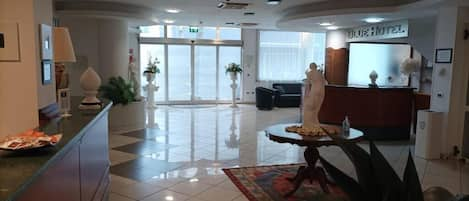
Blue Hotel
Cesenatico
Blue Hotel
Cesenatico
- Option tout inclus disponible
- Animaux de compagnie admis
- Parking inclus
- Restaurant
7.8 sur 10, Bien, 20 avis
7,8
Bien
20 avis
Le nouveau prix est de 47 €
47 €
taxes et frais compris
28 oct. - 29 oct.
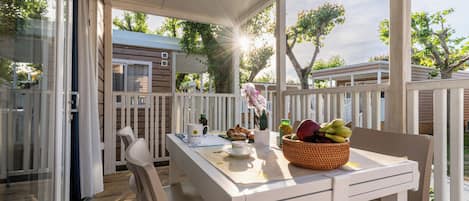
Club Del Sole Adriatico Cervia Easy Camping Village
Centre Historique
Club Del Sole Adriatico Cervia Easy Camping Village
Centre Historique
- Piscine
- Cuisine
- Animaux de compagnie admis
- Parking inclus
9.4 sur 10, Exceptionnel, 10 avis
9,4
Exceptionnel
10 avis

Elefantino Grey - FAMILY HOTEL
Cervia
Elefantino Grey - FAMILY HOTEL
Cervia
- Petit déjeuner inclus
- Spa
- Wi-Fi gratuit
- Climatisation
7.6 sur 10, Bien, 14 avis
7,6
Bien
14 avis

Balance Hotel
Cervia
Balance Hotel
Cervia
- Piscine
- Petit déjeuner inclus
- Animaux de compagnie admis
- Wi-Fi gratuit
7.4 sur 10, Bien, 13 avis
7,4
Bien
13 avis
Le nouveau prix est de 77 €
77 €
taxes et frais compris
25 oct. - 26 oct.

Hotel Turquoise
Valverde
Hotel Turquoise
Valverde
- Piscine
- Petit déjeuner inclus
- Animaux de compagnie admis
- Wi-Fi gratuit
7.8 sur 10, Bien, 34 avis
7,8
Bien
34 avis

Hotel Lem Casadei
Centre Historique
Hotel Lem Casadei
Centre Historique
- Spa
- Animaux de compagnie admis
- Wi-Fi gratuit
- Restaurant
8.8 sur 10, Excellent, 3 avis
8,8
Excellent
3 avis
À propos du quartier
À Comacchio, cet appartement vous promet de passer un séjour exceptionnel. Faites le plein de culture aux emblématiques Musée Delta Antico et Manufacture des Mariniers, ou mettez le cap sur les incontournables Pont Trepponti et Sanctuaire de Santa Maria in Aula Regia. Les agréables Circuit de Pomposa et Labyrinthe Éphémère Galassi méritent aussi une visite. Consultez notre guide de voyage sur Comacchio
Afficher plus d’appartements à Comacchio
Comacchio, Ferrara
À proximité
- Circuit de Pomposa5 min en voiture - 3.2 km
- Marais Valli di Comacchio8 min en voiture - 5.3 km
- Pont Trepponti12 min en voiture - 8.9 km
- Parc du delta du Pô12 min en voiture - 8.9 km
- Dôme de San Cassiano12 min en voiture - 9.2 km
Comment se déplacer
- Gare de Massafiscaglia - 25 min en voiture
Restaurants
- Ciliegina Fish4 min en voiture
- Monnalisa4 min en voiture
- Bar Bagno Giada4 min en voiture
- Ristorante Bora Bora4 min en voiture
- Ristorante Moorea4 min en voiture
Foire aux questions
Les animaux domestiques sont-ils admis dans l'hébergement ?
Oui, les animaux de compagnie sont admis au sein de l'hébergement.
Quelle est l'heure d'arrivée à l'hébergement Cortina 2-24 Appartement confortable de deux pièces face à la mer ?
Les arrivées sont prévues à partir de 15 h 00.
Quelle est l'heure de départ de l'hébergement Cortina 2-24 Appartement confortable de deux pièces face à la mer ?
Le départ a lieu à 10 h 00.
Où se situe l'hébergement ?
Découvrez toutes les richesses de Comacchio grâce à cet immeuble qui se trouve à 3 km de Circuit de Pomposa et à 4,7 km de Marais Valli di Comacchio. Parc du delta du Pô et Pont Trepponti sont également à 10 km de distance.
Avis
8,4